
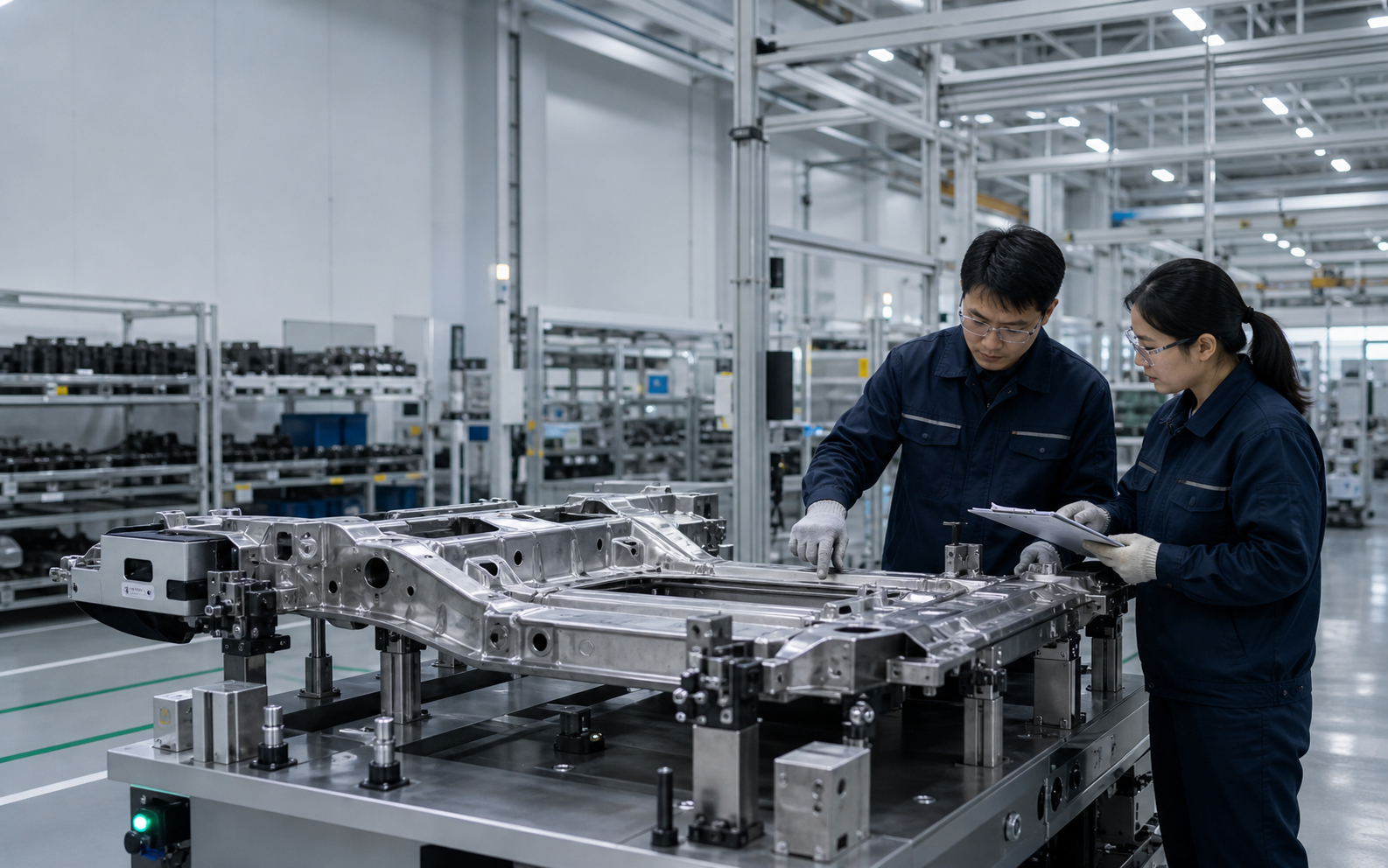
As vehicles, BOMs, materials and suppliers change, a one-off vehicle footprint quickly becomes outdated. This major automotive group built one platform to connect 7+ business systems, including BOM, CAMDS, SAP, MES and TMS, and establish a continuously updated LCA data foundation for 20,000+ vehicle components.
The challenge: one-off calculations could not keep pace
The customer needed to support vehicle PCF, EPD, supplier data collaboration and subsequent verification delivery. The previous approach relied on cross-functional spreadsheets, manual consolidation and project-specific models. It could deliver a result, but product-structure changes were difficult to propagate, supplier data lacked stable links to vehicles and components, and review findings often became fragmented across emails, attachments and reports.
The goal was reframed as an operating platform for automotive product environmental data. Existing business systems would continue to own their master data. nexLCA would connect the environmental context through product structures and adapters, while keeping models, sources, calculations, reviews and delivery continuous.
Step one: connect vehicles, BOMs, components and materials
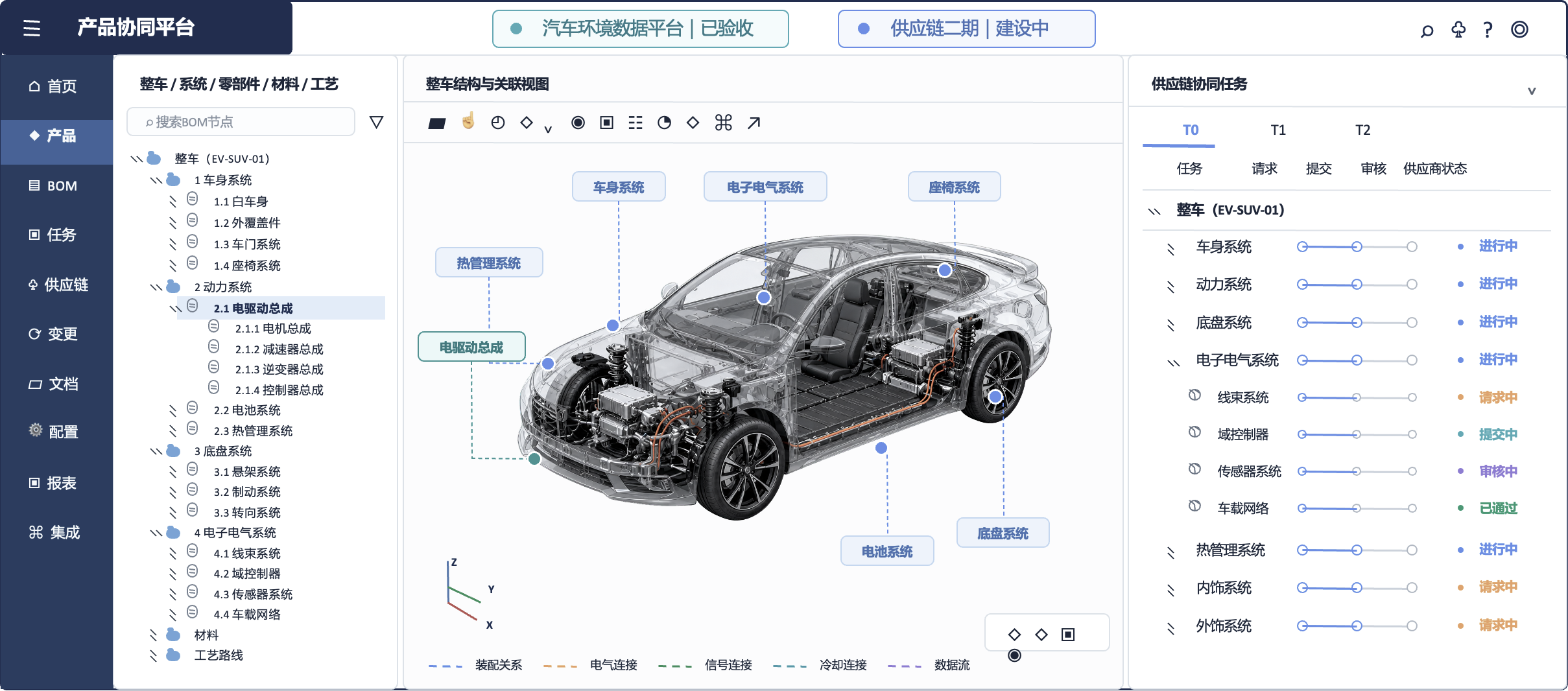
The first workstream organized vehicle lines, vehicle programs, super BOMs, components, materials and supply relationships into one product structure. The platform did not replace BOM, CAMDS, SAP, MES or logistics systems. It connected those business sources and mapped their records to a calculable product system.
The lifecycle boundary covered raw-material acquisition and pre-processing, production, distribution, use and end-of-life. Each stage continued into relevant systems, activity data, material inputs and supporting evidence. Changes to BOM versions, material composition, mass balance or supplier relationships could enter the same data chain instead of requiring a new static model.
Step two: engage T1–Tn suppliers at scale
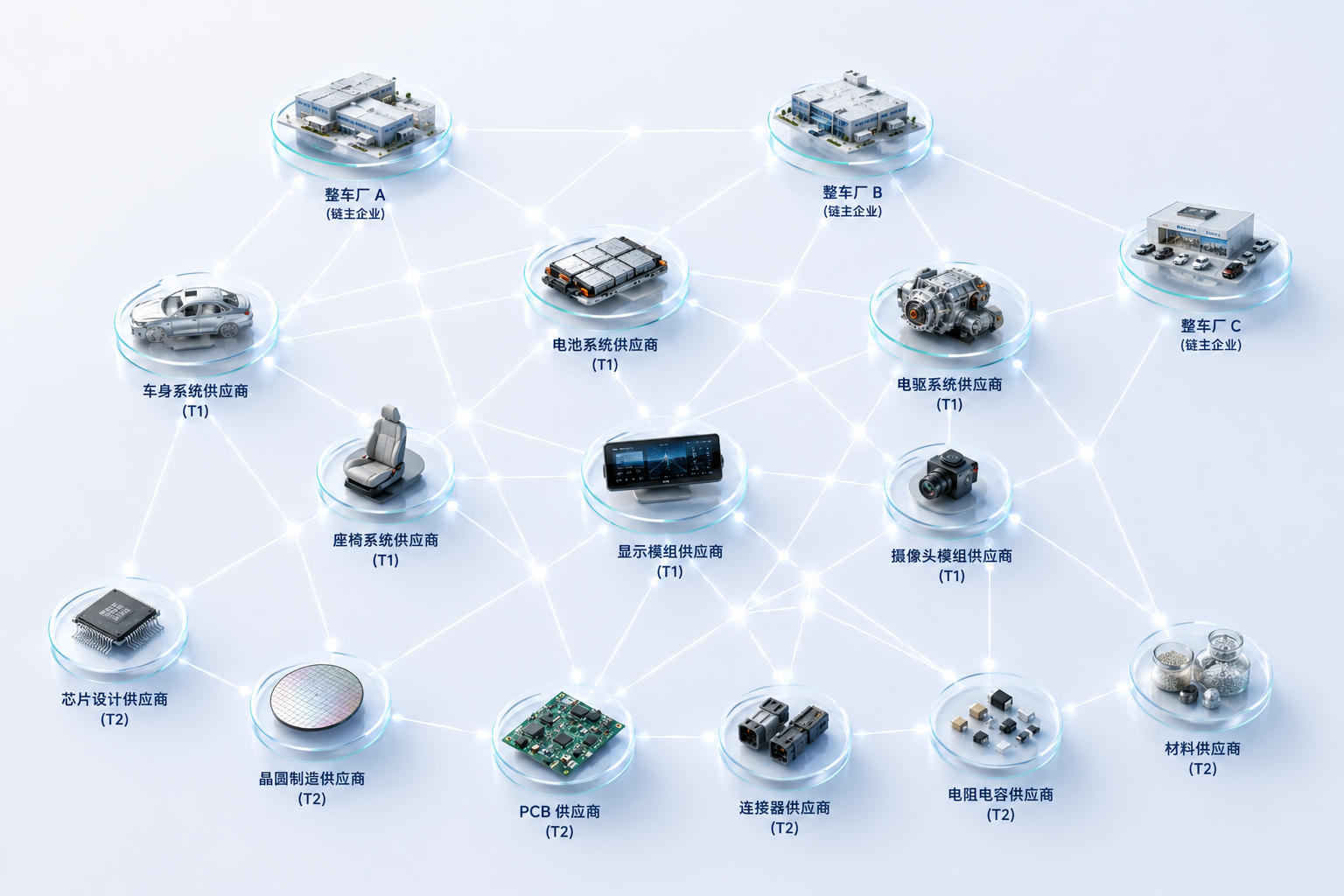
The second workstream organized supplier invitations, contacts, component matching, supply confirmation and data tasks as a collaboration network. The platform supported T1–Tn supplier collaboration, 1,000+ supplier registrations and 7,000+ data tasks, turning repeated data chasing into a traceable, reviewable and reusable online workflow.
Receiving a spreadsheet was not considered completion. Each data point needed an applicable product, period, boundary, source and evidence. Review status and return reasons entered the version record. Approved data could be reused through BOM and supplier relationships for later vehicles, component footprints, battery work or CBAM tasks.
Step three: deliver vehicle PCFs, EPDs and hotspot analysis
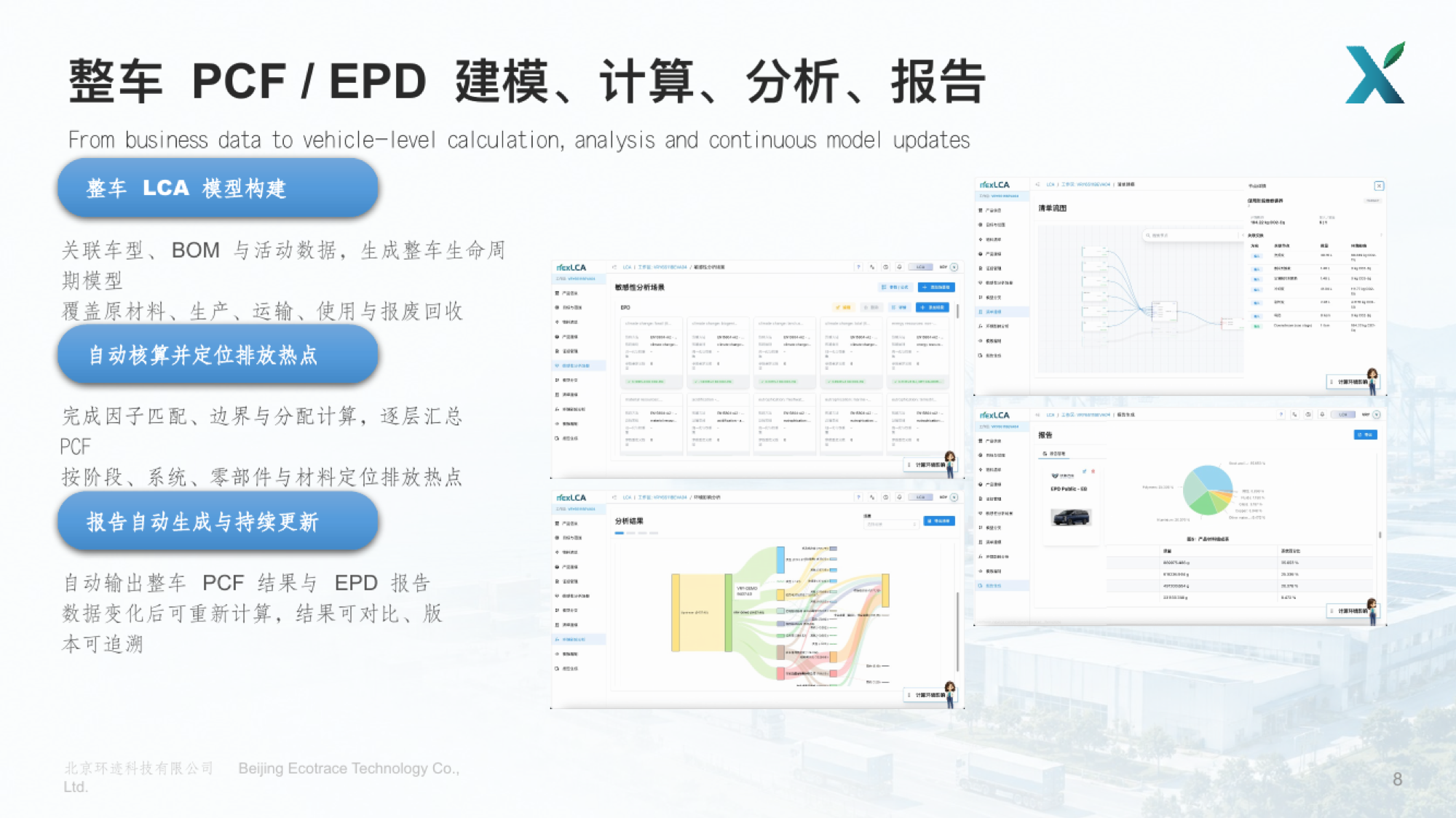
The third workstream linked vehicle, BOM and activity data to a complete lifecycle model. LCA experts confirmed the functional unit, system boundary, allocation method and factor decisions. A deterministic calculation engine then executed lifecycle impact assessment, contribution analysis and result aggregation.
The result was more than one total. Impact could be located by lifecycle stage, system, component and material for design, procurement and reduction discussions. Reporting material came from the same model and calculation record. When operational data changed, the model could be recalculated while preserving prior versions and the reason for change.
Step four: complete review, verification and delivery
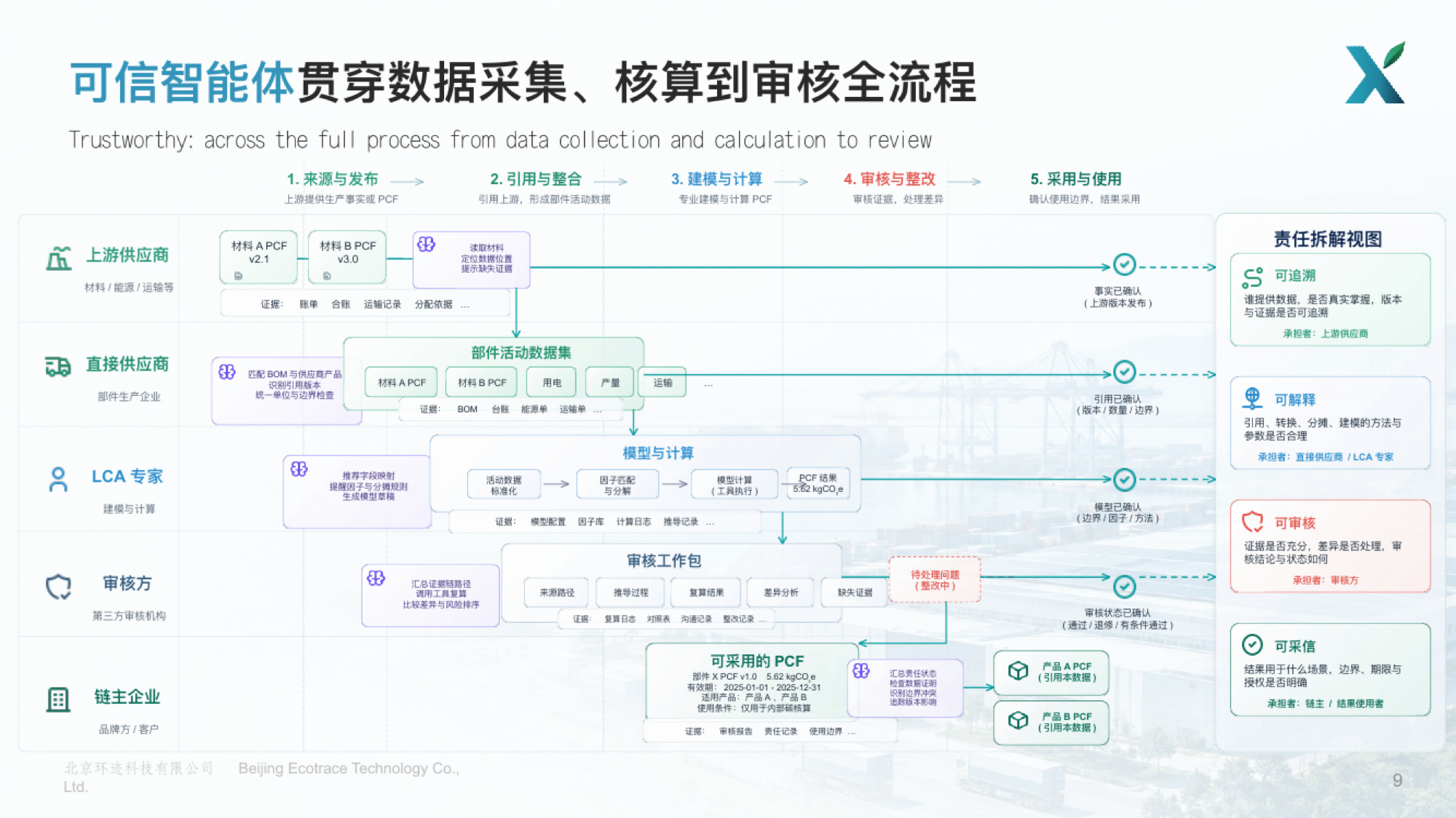
The fourth workstream made responsibility explicit for upstream suppliers, direct suppliers, LCA experts, reviewers and the value-chain owner. Activity data linked to invoices, ledgers, certificates, transport records or allocation evidence. Models recorded factor sources, method decisions and calculation traces. Review tasks captured findings, remediation, re-review and approval.
This responsibility structure made results traceable to sources, explainable through calculation methods, reviewable through status and explicit about approved use. Deliverables could include product environmental data records, PCF / EPD reporting material, verification work packages, certificates or structured customer outputs.
The outcome: continuous vehicle footprinting
The project brought vehicle structures, BOMs, supplier data, LCA models and verification material into one platform. When vehicles or sourcing relationships change, the team can update affected inputs and recalculate. Engineering and procurement can also use material, component and supplier hotspots to guide product improvement.