

The most time-consuming part of supplier carbon data is not sending a survey. It is chasing responses, checking formats, aligning scopes and resolving anomalies. Linking every request to a product and material makes the result usable in Scope 3 and product footprints.
Why one mass spreadsheet is inefficient
One supplier may provide several materials and components. Data from different plants, lines and periods are not automatically interchangeable. A company-level annual survey sent to every supplier tends to produce totals that cannot be mapped to the product in question.
Work backwards from products and BOMs
Start with the product result and work backwards: which materials and components are required, who supplies them, which period and boundary apply and what evidence is needed? The task object changes from “a supplier” to “one data requirement for a product or material supplied by that company.”
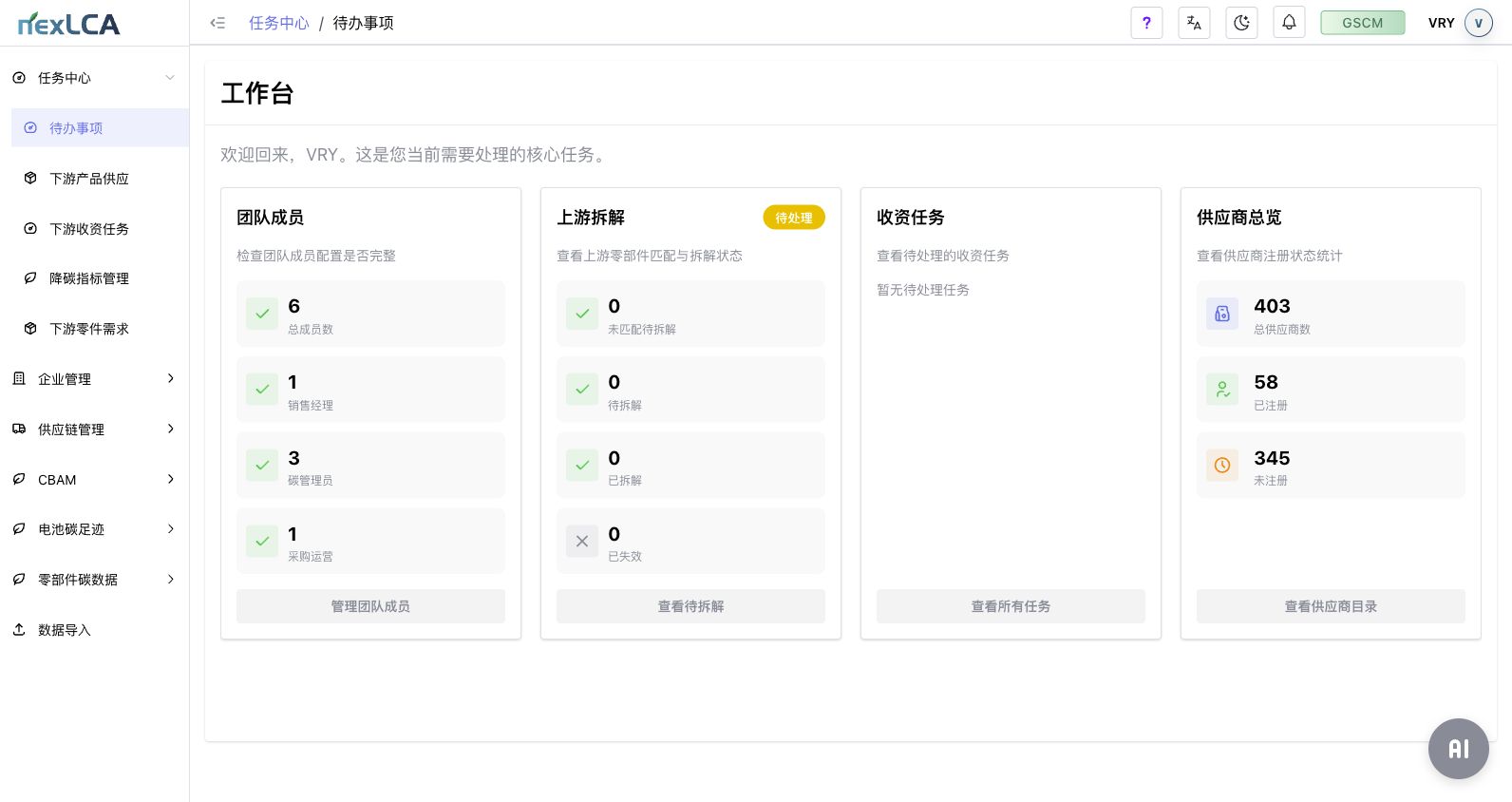
Track review, return and remediation automatically
Submission does not mean the data can be used. Teams need to check units, periods, boundaries, anomalies, allocation and supporting material. Return reasons, owners, revisions and re-review status should stay in the same task version rather than fragment across email.
Reuse approved data
Approved data can support later vehicles, product footprints, Scope 3, CBAM or customer deliveries only when tasks stay linked to products, materials, supply relationships and evidence. Reuse does not mean ignoring change: each use still checks the applicable period, product and boundary.
Start with one product family
A company does not need a complete multi-tier supply graph before it begins. Start with one product family, direct suppliers and one defined delivery while establishing:
- the product or BOM scope;
- direct suppliers and contacts;
- required data, evidence and intended use;
- review roles, deadlines and anomaly handling.
nexLCA issues requests by product, material and supplier relationship, tracks every status and retains approved results. Teams maintain fewer spreadsheets, while suppliers know exactly what to submit, when it is due and what needs correction.