
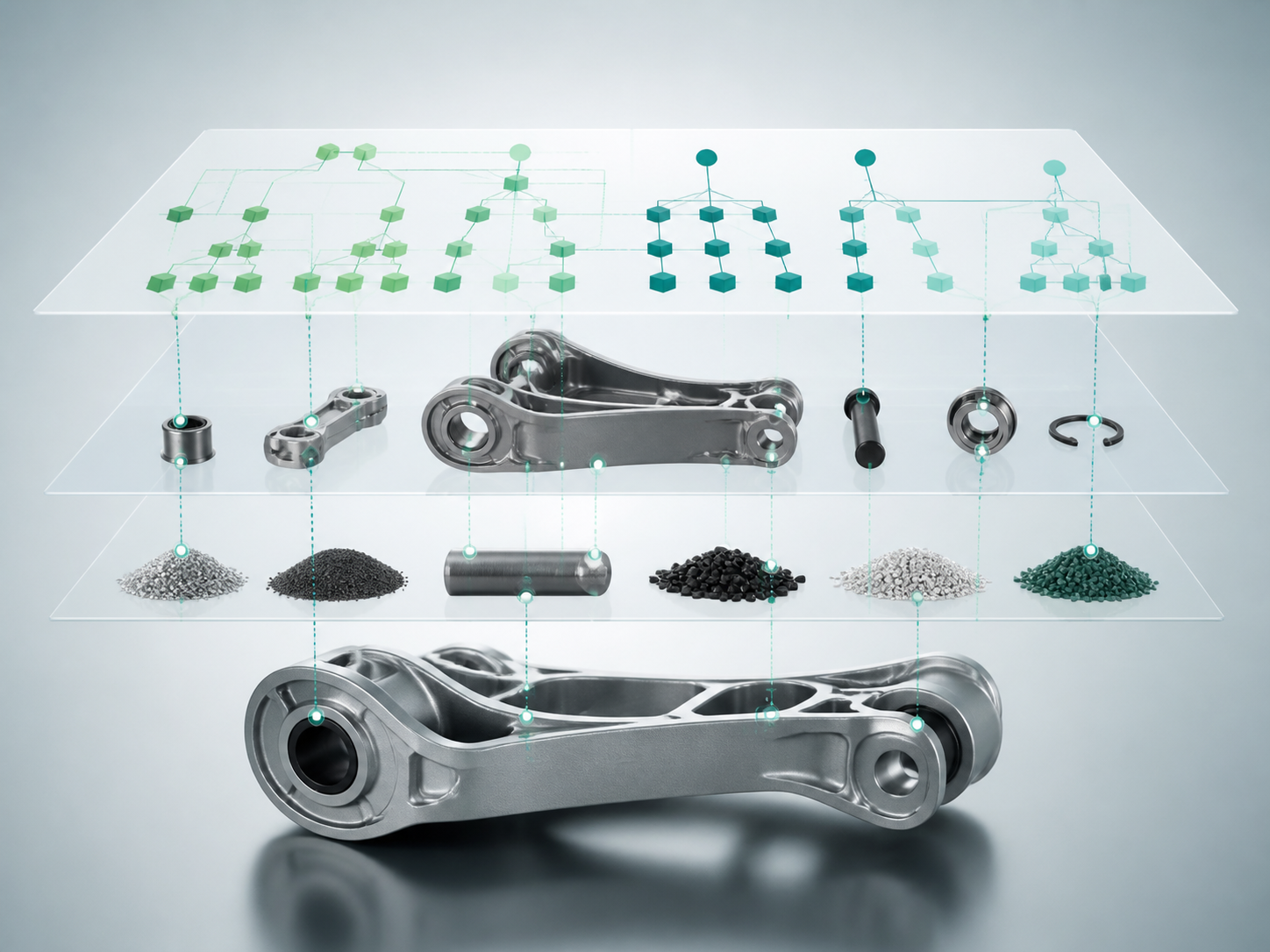
Many teams delay product footprinting because they think their data is incomplete. You do not need everything on day one. Start with the product, BOM, processes and energy data you have, then use the model to identify and close the gaps.
Start with five types of data
A useful product footprint normally needs:
- the product, functional unit and applicable period;
- relationships between the BOM, processes and lifecycle stages;
- activity-data sources, owners and supporting material;
- factor decisions and geographic and temporal fit;
- allocation methods, assumptions, calculation versions and review status.
Together, these objects form the product system. A report is one output generated from its current version.
You can start before the data is complete
Begin with one representative product or family. nexLCA organizes the available files into a lifecycle inventory, flags missing items and shows where measured data matters and where database values or documented assumptions can support an initial model.
Why sources still matter
Customers and verifiers usually ask three questions: where did this value come from, why was this factor selected and which version produced the result?
Sources may include business systems, ledgers, supplier files or third-party databases. Professional decisions cover boundaries, factors, allocation and gap treatment. Accountability records retain submission, review, return, revision and approval. Without any one of these layers, a result is difficult to update credibly after product change.
Check whether the data is ready to use
Four questions provide a quick check:
- Can the result be traced to lifecycle stages, processes, materials and activity data?
- Can users see factor sources, applicability decisions and replacement history?
- When a BOM or supplier changes, can only the affected part be updated?
- Do reports, charts and customer outputs come from the same model version?
If the system can answer these questions directly, the work can support not only this report but the next customer request, product change and reduction analysis.
How nexLCA helps
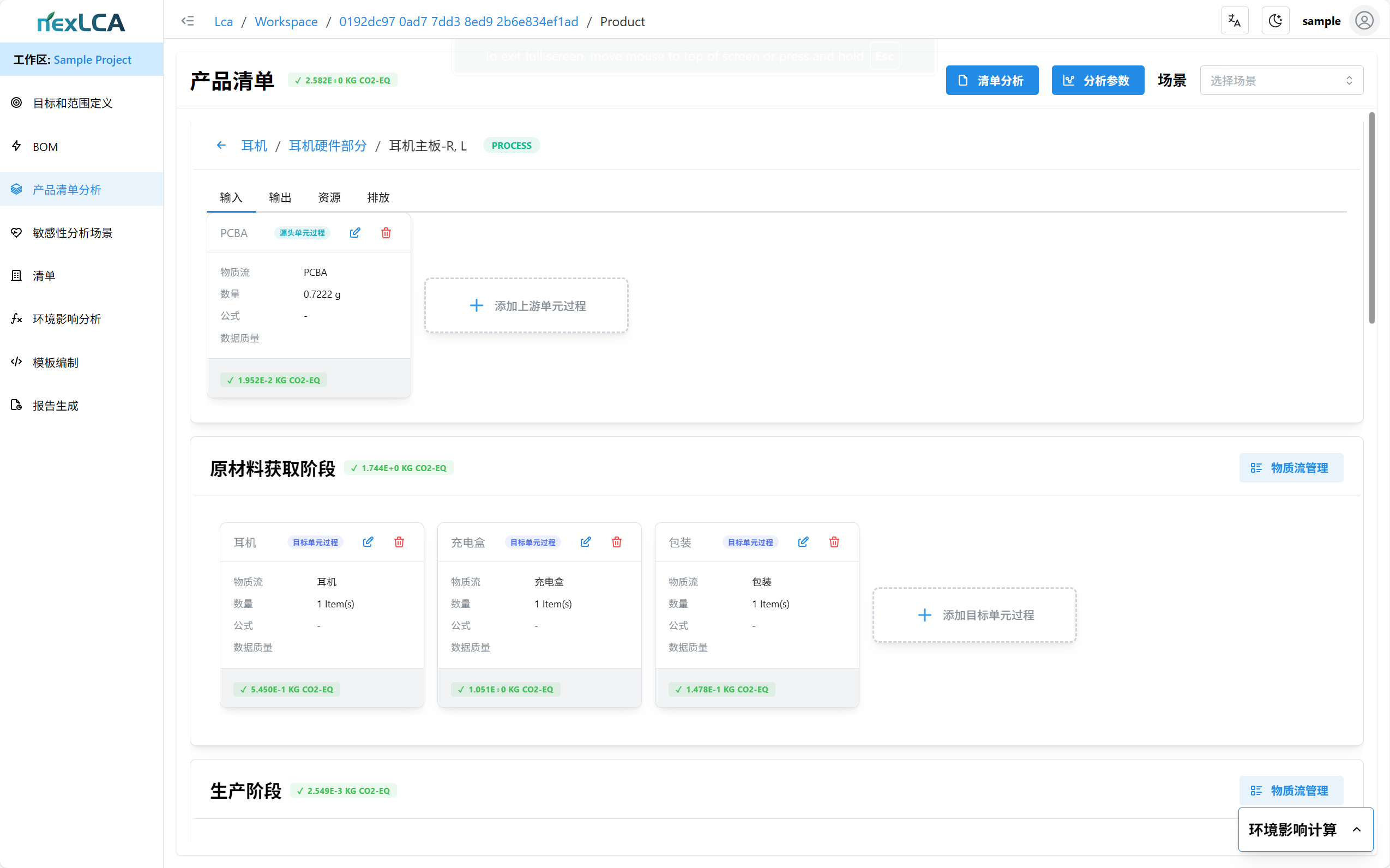
nexLCA imports BOM, process and energy files, organizes lifecycle inventories, searches professional factors, runs deterministic calculations and generates PCF, LCA, EPD and verification outputs. Its AI modeling assistant also identifies gaps and reduces repetitive setup for experts.
Start with one product and build a product carbon data foundation the whole business can reuse.